The case for integrated non-revenue water management with one partner
Date:
Publication:
By leveraging advanced acoustic leak detection, non-invasive condition assessments, and real-time pressure control, water utilities can shift from reactive repairs to predictive maintenance.
Key Highlights
Aging water pipes in the U.S. cause frequent leaks and significant water loss, costing utilities billions annually and impacting service reliability.
Integrated solutions like acoustic sensors and condition assessments enable proactive leak detection and targeted pipe rehabilitation, saving costs and extending asset lifespan.
Continuous monitoring of pressure and flow patterns helps detect anomalies early, reducing emergency repairs and water waste.
When aging pipes, tight budgets, and rising regulatory pressure converge, utilities need more than a collection of point solutions. They need an integrated solution.
The United States has 2.2 million miles of water piping, and a significant share of it is operating past its design life. The consequences are measurable and costly: a pipe breaks every two minutes somewhere in the country, losing six billion gallons of water each day. Across the system, non-revenue water (NRW) loss costs utilities $6.4 billion annually from water that is treated, pumped, and pressurized, yet never billed. For utilities already running lean, those costs impact budget, staff time, and capital spending.
Addressing NRW is not a single-technology problem. Leakage originates from aging mains, pressure surges, failing control valves, and anomalies too subtle for traditional monitoring to catch. Tackling it piecemeal; one vendor for leak detection, another for pressure management, another for condition assessment, fragments data and multiplies integration burdens which can leaves gaps in coverage. The more effective approach is consolidation: a single provider with solutions designed to work together across the full pipeline lifecycle.
Determine what your pipes are telling you
Mueller
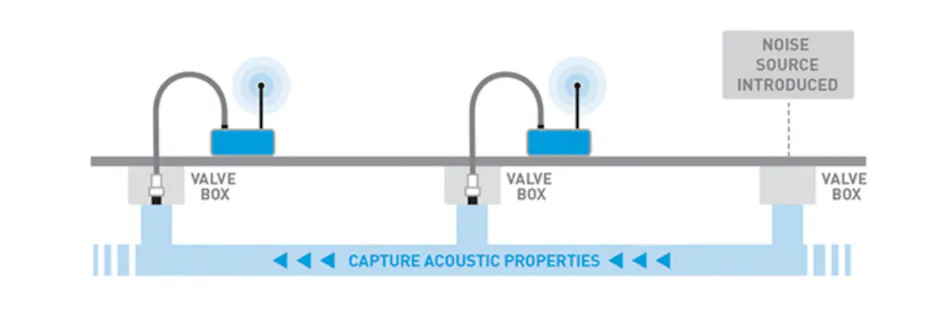
Condition assessment using Echologic ePulse.
The first challenge in reducing NRW is prioritization. With thousands of miles of underground assets and limited field crews, decisions about where to dig and where not to dig, carry real financial weight. Proactive pipeline management solutions can address this using non-invasive acoustic leak detection and condition assessment technologies that measure pipe health without service disruption.
ID 255503150 @ Max5128 | Dreamstime.com